
I talk to hiring managers every week across Dallas, Fort Worth, Houston, Austin, and San Antonio. And right now, one topic keeps coming up in almost every conversation.
It is not finding talent. It is keeping it.
That shift matters. A lot.
The DFW job market has entered what many economists are calling a low hire, low fire environment. Hiring has slowed. Layoffs have cooled too. Governing recently described North Texas as shifting from boom to standstill, with stalled hiring paired with fewer layoffs. That means the pressure has moved. If you are not losing people, you are winning. And if you are losing people right now, replacing them is harder and slower than it looks.
Here is my honest take after years in this business. Retention is not an HR checkbox. It is a growth strategy.
The Market Has Shifted Under Our Feet
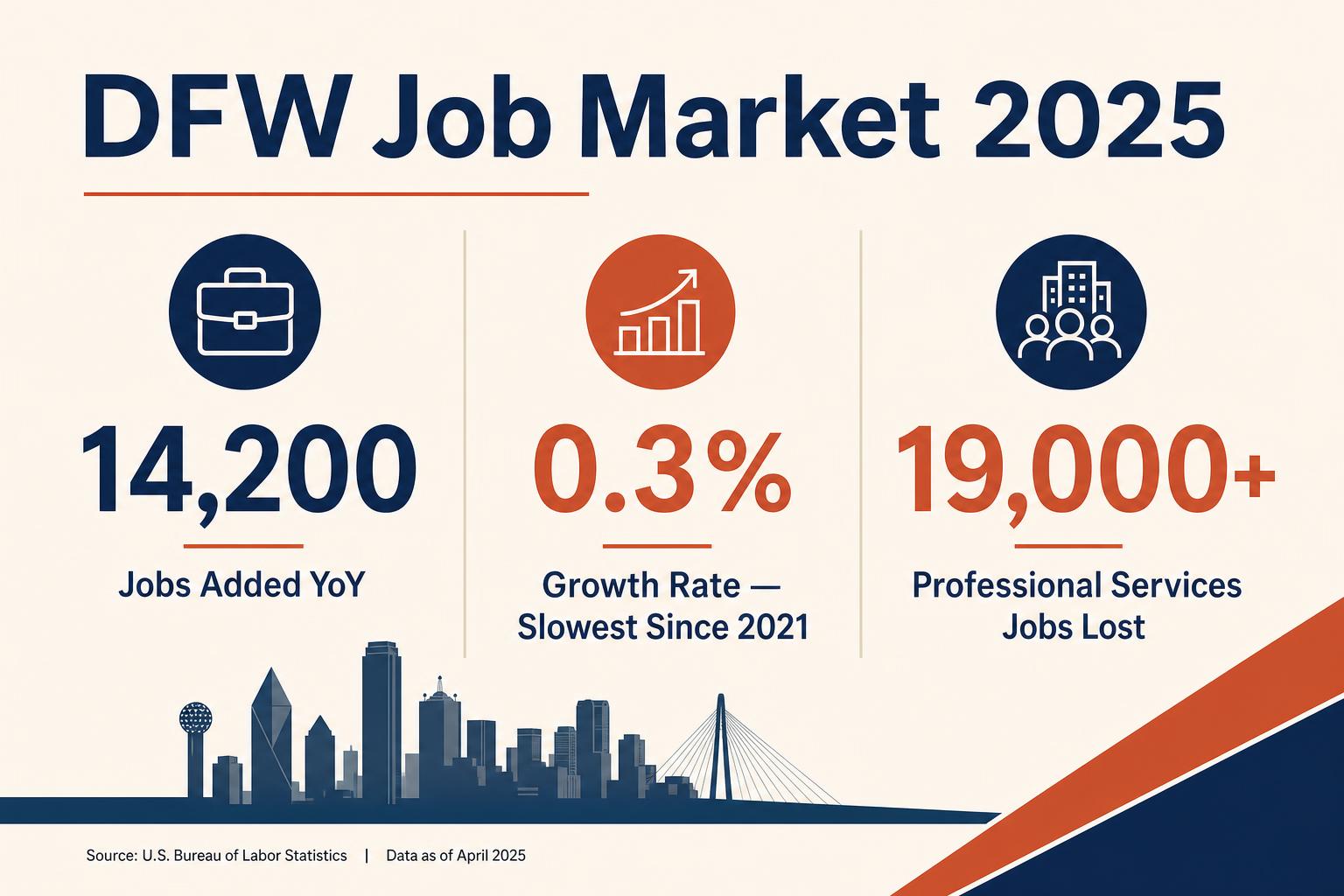
Recent DFW employment data shows the region added just 14,200 jobs year over year through December 2025, which works out to a 0.3 percent growth rate. That was the slowest pace since the post COVID recovery began in 2021. Earlier in 2025, the market was still adding more than 56,000 jobs year over year. That is a major slowdown, and it changes the way employers should think about workforce strategy.
The same update shows that Professional and Business Services lost 21,700 positions year over year in DFW. Manufacturing also fell, and Financial Activities moved down as well. Some employers look at that and see a hiring opportunity. I do too. But I also see a retention warning. Those employees left somewhere. The companies they left are now backfilling, rebuilding, and trying to explain why people moved on.
Do not be one of those companies.
I have written before about how DFW continues to attract relocations and business growth. That kind of expansion is good for Texas. It also means the best employees still have options, even in a slower market.
What Employees Are Actually Looking For
This is where many employers get it wrong. They assume pay is everything. Pay matters, but it is rarely the only reason someone walks out the door.
The market has moved past pedigree first hiring. More candidates want employers who recognize transferable skills, respect lived experience, and communicate like real people. That respect shows up in onboarding. It shows up in manager behavior. It shows up in whether someone can see a future at your company.
Merit America recently pointed to Dallas as a top market for career changers. That matters because it tells us something bigger. Good candidates are not only coming through traditional pipelines. They are moving between industries, building new skills, and looking for companies willing to see potential, not just job titles.
I have placed professionals across manufacturing, supply chain, logistics, construction, IT, and healthcare. In every one of those sectors, the pattern holds. People leave managers. They leave stagnation. They leave environments where they feel invisible.
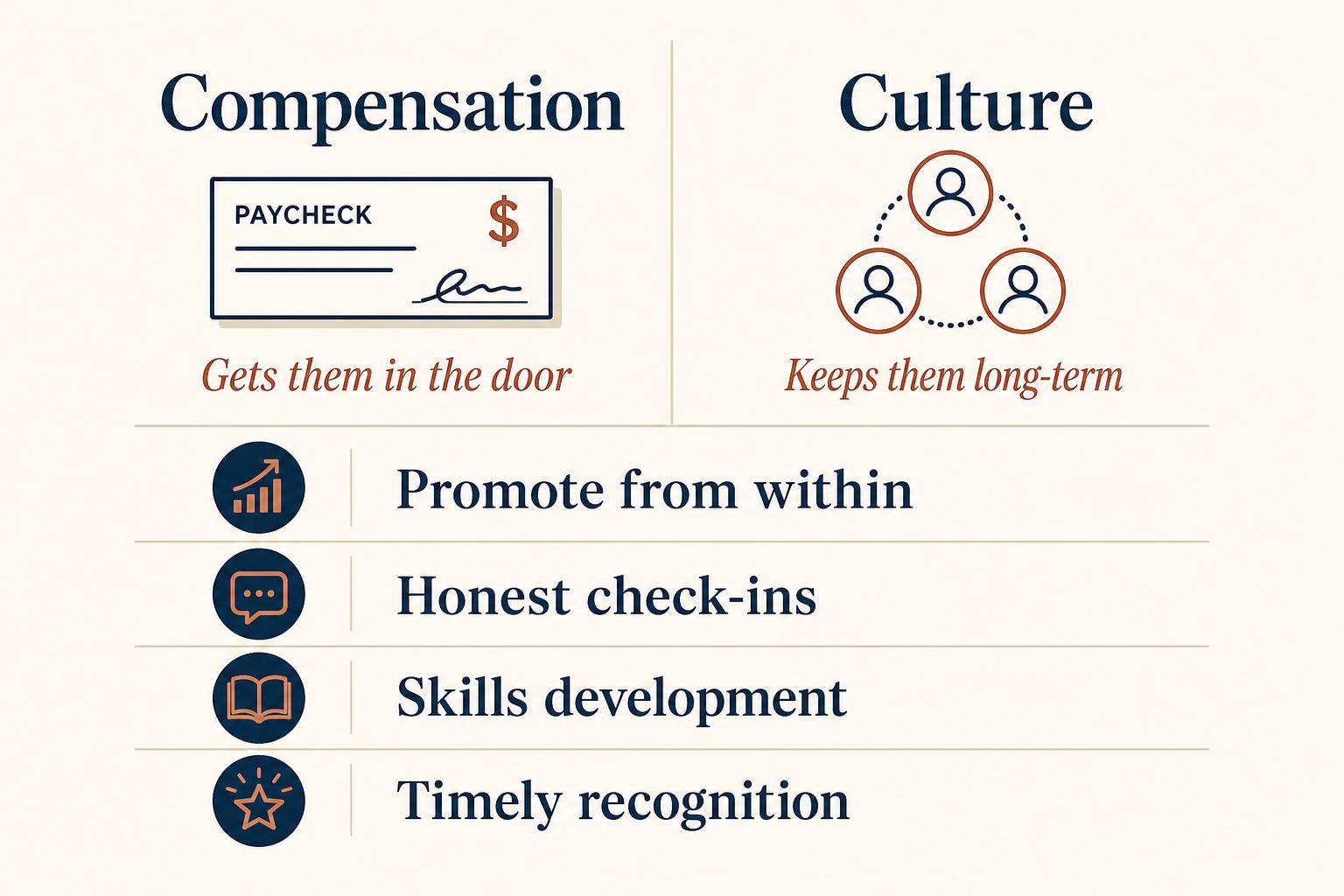
Compensation gets someone interested long enough to show up. Culture is what makes them stay.
The Real Cost of Turnover in Texas
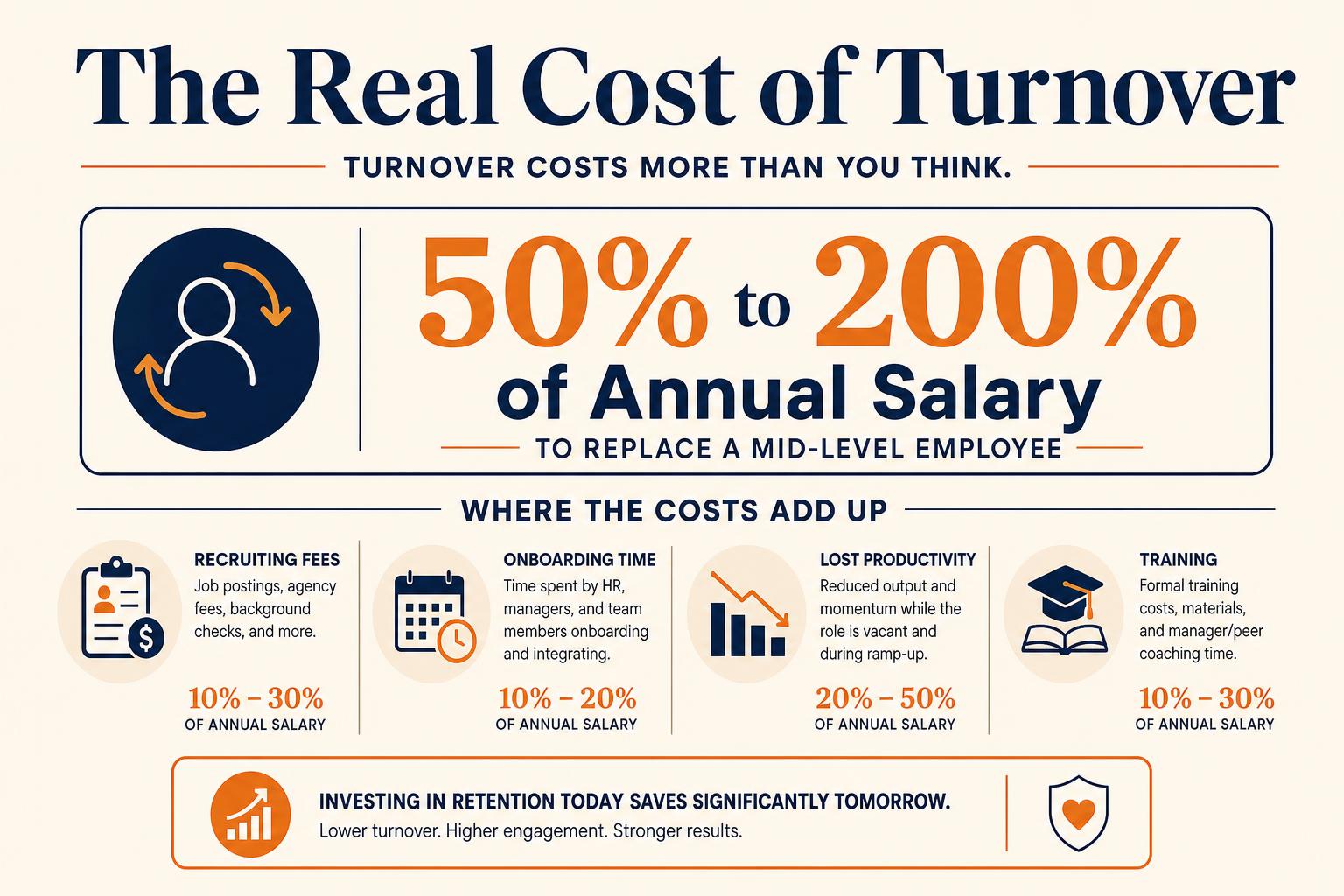
Here is something many hiring managers still underestimate. Replacing a mid level employee is expensive. It is not just the recruiter fee or the ad spend. It is onboarding time. It is lost productivity. It is the pressure put on the rest of your team while the seat stays open. In many cases, the true cost lands somewhere between half and twice that employee’s annual salary.
That is why retention deserves real strategy. When you keep a solid employee, you are not just avoiding a vacancy. You are protecting continuity, output, and team morale.
The wage side matters too. According to the same DFW market update, Dallas Fort Worth remained below the national unemployment rate at 3.6 percent in December 2025. Workers know that even in a slower market, strong employers are still hiring. At the same time, they are weighing where their paycheck goes furthest and whether their employer values them enough to keep pace.
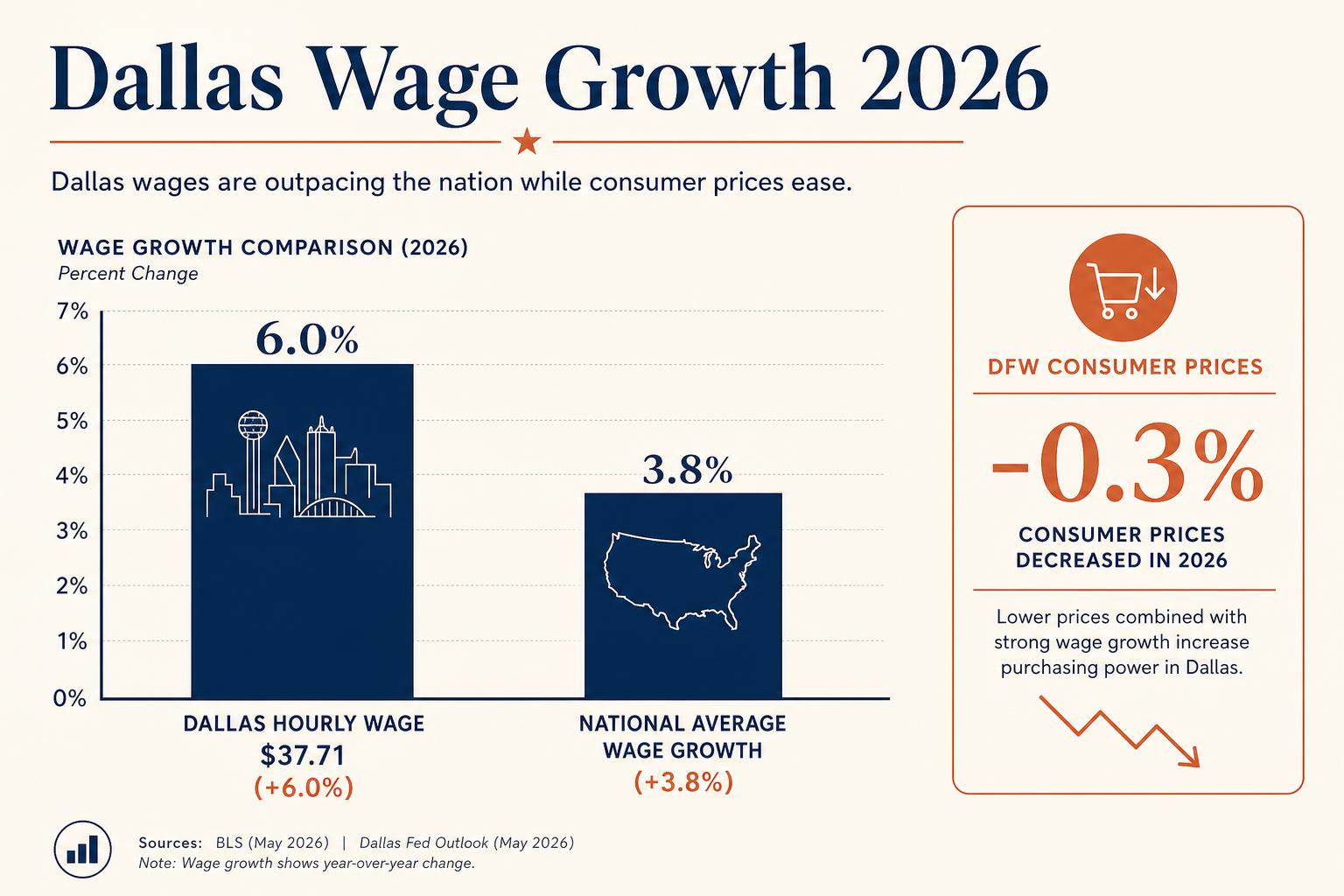
In other words, employees are not only asking what they earn. They are asking what staying is worth.
What High Retention Companies Do Differently
After years of building teams and working with employers across Texas, I have noticed clear patterns in companies that keep their best people.
First, they promote from within whenever possible. Nothing signals you have a future here more clearly than watching someone on your team move up.
Second, they hold real check in conversations. Not once a year. Not just when there is a problem. Monthly or quarterly conversations where managers ask what is working, what is not, and what support looks like right now.
Third, they invest in skills development. That can mean certification support, better onboarding, cross training, leadership coaching, or simply giving someone room to stretch. I have written about how data and better hiring systems can improve recruiting decisions. The same mindset applies after the hire. The best companies use better information to understand what employees need before they leave.
Fourth, they move quickly on recognition. A raise matters. So does a well timed bonus, flexible scheduling, a title adjustment, or public appreciation. Small moves at the right moment often land harder than larger ones that come too late.
A Note for Job Seekers
If you are currently employed and quietly wondering whether the grass is greener elsewhere, I will give you the same honest advice I give candidates every week.
The market is slower right now. But the strongest candidates are still getting attention. Employers still compete for people who bring experience, adaptability, and strong communication. At the same time, slow hiring processes are pushing good candidates away. That tells you something important. A company’s hiring process often reflects how it operates internally too.
Know your value. Know the market. And make sure the conversations you have with your current employer reflect both.
The Bottom Line
Retention is not soft work. It is strategic work.
In a market where hiring has slowed and strong talent is still moving, the companies that hold onto their best people will build the strongest teams of the decade. I have seen this play out across every industry I have worked in, from IT to healthcare to manufacturing. The employers who treat retention as a priority right now will not need to scramble when the market heats back up.
To learn more about how I approach talent strategy across Texas, visit kallieboxell.com. You can also explore my portfolio for more on the work I do with employers building lasting, high performing teams.
And if you want a more personal window into the ideas and inspiration behind my work, you can also follow along on Pinterest.
The best time to focus on retention is before you have a problem. That time is right now.
Kallie Boxell is a recruitment director based in Dallas, Texas, specializing in talent acquisition strategy and team development across multiple industries.